Buying a House Sight Unseen: How to Do It Without Regretting It
May 01, 2026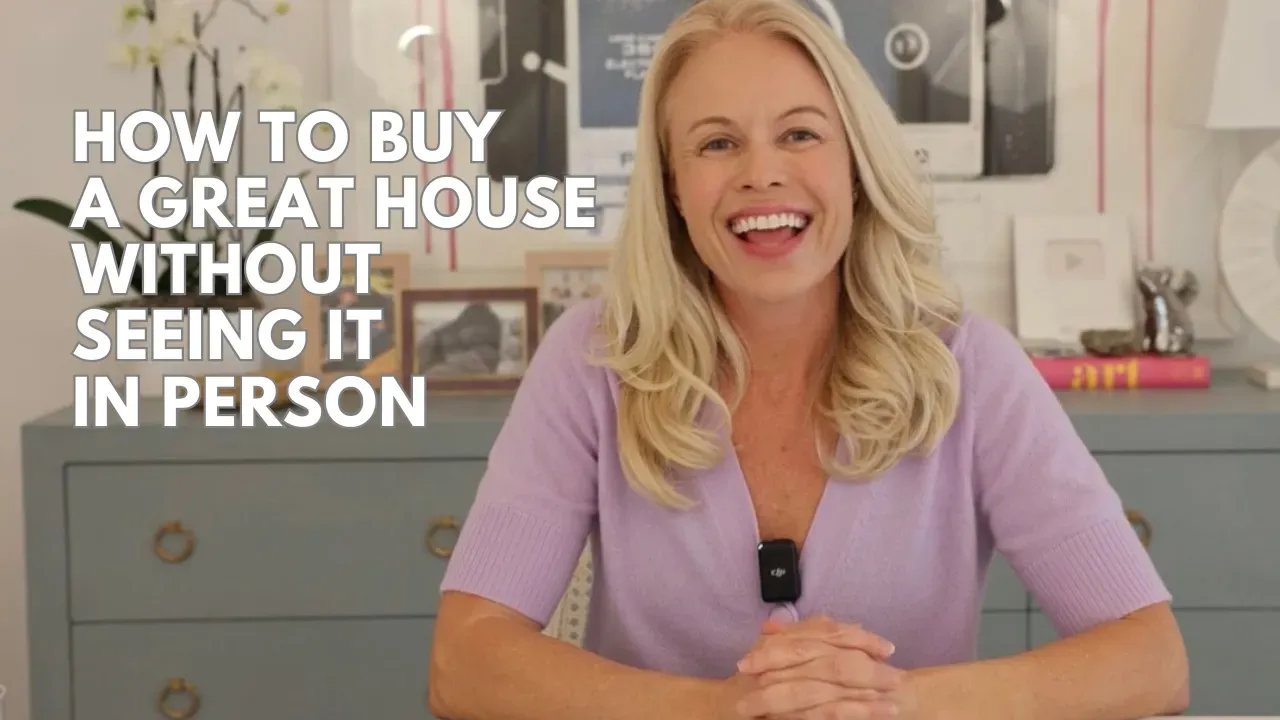
I bought my primary home without ever seeing it in person.
Not an investment property.
Not a second home.
The house I live in today, I did not step foot inside until I owned it.
If you’d rather watch or listen to the full breakdown, here’s the video:
https://www.youtube.com/watch?v=T2ULoT-9ZMs&t=6s
That sounds insane to a lot of people, and honestly, I get it. Buying a house sight unseen sounds reckless on paper. But it does not have to be reckless. It just has to be intentional.
There is a massive difference between blindly buying a house and buying one remotely with the right people, the right process, and the right research behind you.
I am going to walk you through exactly how I did it, what made it work, and what I would tell anyone considering doing the same thing.
Buying Sight Unseen Is a Gamble—But It Can Be an Educated One
Let’s start here.
Buying a house without seeing it in person is absolutely a gamble. There is no point pretending otherwise.
You are making a major financial decision without physically stepping into the property. That comes with risk. But there is a huge difference between making a blind gamble and making an educated one.
That difference comes down to one thing: who you trust and how much work you are willing to do before you buy.
This is not uncommon anymore. Military families have been doing this for years, but since 2020, remote homebuying has become much more common nationwide. People are relocating for affordability, work, lifestyle, or family. They are moving to places they cannot easily visit first. That means more buyers are relying on listing photos, agent walkthroughs, online tools, and local experts to make decisions.
That can work very well.
It can also go very badly if you cut corners.
Step One: Your Agent Has to Be Exceptional
If you are buying a house sight unseen, your real estate agent is not just opening doors.
They are your eyes.
They are your ears.
They are your filter.
They are your first line of defense.
That means this is not the time to use someone just because they are nice, related to you, or loosely recommended by a friend.
This is expert or nothing.
If your agent is not exceptional, go see the house yourself. Period.
And no, “they seem great” is not enough.
You need to vet them properly.
Start with reviews. Read a lot of them. Not just the star rating. Read the details and look for patterns. Are people saying this person is blunt, thorough, and honest? Are they saying this person goes above and beyond? Are they saying this person caught issues others missed?
That is what you are looking for.
Then, verify how many homes they have actually sold in the last year and what price points they work in. This matters more than people realize.
If you are buying a million-dollar home and the agent has only sold entry-level homes, that is not the right fit. If you are buying at the lower end of the market and the agent only sells luxury homes, that can also be a mismatch.
You need someone who understands the type of home you are buying, the market you are buying in, and what problems to look for at that price point.
This takes effort.
Do it anyway.
If you are not willing to do that work, you need to get on a plane and see the house yourself.
Avoid the “Sunshine Sally” Agent
This is one of the biggest traps in remote homebuying.
You do not want an agent who tells you everything is wonderful.
You do not want someone who walks through the property pointing out how cute the kitchen is, how bright the living room feels, and how charming the backyard looks while carefully avoiding every issue that might become your problem later.
That is what I call a “Sunshine Sally.”
Everything is sunny. Everything is beautiful. Everything is perfect.
That is exactly what you do not want.
You want the opposite.
You want someone who points out what is annoying. What is inconvenient. What is expensive. What is going to wear on you six months after move-in.
When my agent walked me through this house, she was not showing me the pretty parts first. She was showing me the things she thought would bother me.
She showed me the stairs and made a point to walk them in a way that made it clear exactly how many there were and how that would feel day to day.
She pointed out the tree over the pool and told me I'd be dealing with leaves constantly.
She showed me the negatives on purpose.
That is what a good agent does.
The listing photos already show you the best version of the house.
Your agent’s job is to show you the truth.
Live Walkthroughs Are Non-Negotiable
If you are buying a house sight unseen, a prerecorded video is not enough.
You need a live walkthrough.
FaceTime. WhatsApp. Video call. Whatever platform works. It does not matter. What matters is that it is live.
Why?
Because you need to be able to stop them and ask questions in real time.
Turn left.
Zoom in.
Go back.
Open that door.
Show me the ceiling.
What is that stain?
What does that look like in better light?
You need to be able to move through the house with them as if you were physically there.
That interaction matters.
It lets you control what you are seeing instead of passively receiving what someone chose to show you.
If an agent will not do that, do not work with them.
It is that simple.
Your Home Inspector Matters Just As Much
Your home inspector is your second set of eyes.
This is not the place to blindly accept whoever your agent recommends and move on.
Get the recommendation, then vet them yourself.
Research them thoroughly. Read reviews. Look for details. Look for consistency. Look for signs that they are meticulous, communicative, and thorough.
The inspector I used had an extensive review history and a very strong process.
More importantly, they did not just send me a report and disappear.
They walked me through what they found.
Live.
Every specialist explained what they saw, what mattered, what was urgent, and what was not.
That is what you want.
Not just documentation.
Context.
You need someone who will help you understand what the report actually means in the real world.
You Still Need to Do Your Own Research
Even with a great agent and a great inspector, you still have homework.
Do not outsource all of your judgment.
You need to research the property yourself.
Start with Google Earth.
This is one of the easiest and most useful tools available to you.
Look at what surrounds the house.
What is behind it?
What is next to it?
What is nearby that the listing photos conveniently ignored?
You would be amazed at how many “dream homes” become obvious nos the second you pull them up on satellite view.
Google Earth will show you what the listing never will.
Then use Google Maps.
Search the area around the house and look at what is operating nearby.
You may find:
- home businesses
- auto shops
- dog boarding
- daycares
- commercial activity in residential areas
That may or may not matter to you, but it is better to know before you buy.
The point is not that these things are automatically bad.
The point is that surprises are expensive.
Research the Area, Not Just the House
This is where many buyers miss the bigger picture.
You are not just buying a house.
You are buying into a neighborhood, a local government, zoning rules, and a lifestyle.
Research all of it.
Look into:
- short-term rental rules
- zoning changes
- neighborhood complaints
- city council decisions
- development plans
- environmental concerns
For me, one of the big ones was avoiding an area overloaded with short-term rentals.
That matters.
So does understanding what your local government allows, restricts, or is actively changing.
This kind of research tells you what life in that house will actually feel like.
And that matters just as much as the house itself.
The Part That Surprised Me Most
Here is the part I did not expect.
I probably would not have bought this house if I had seen it in person first.
And that sounds ridiculous, but it is true.
I would have overanalyzed the stairs.
I would have nitpicked things that did not matter.
I would have gotten into my own head.
Instead, I had to make the decision based on the data, the research, and the people I trusted.
And because of that, I ended up buying a house I genuinely love.
That does not mean sight unseen is better.
It means that sometimes seeing everything clearly has less to do with being physically there and more to do with having the right process.
The Bottom Line
Buying a house sight unseen can work.
But only if you do the work first.
That means:
- the right agent
- the right inspector
- live walkthroughs
- serious research
- zero shortcuts
If you are not willing to do all of that, do not buy sight unseen.
Go see the house.
But if you are willing to do it right, buying remotely can absolutely be done well.
And in some cases, very well.
Whether you are buying across the country, trying to make a move with limited time, or just figuring out what is realistic for your next chapter, the right strategy matters more than rushing the decision.
A good home purchase is not about guessing. It is about having the right people, the right information, and a plan that actually makes sense for your life.
If you are weighing a move and want to talk through what makes sense before you make one, my team and I are always happy to help.
📞 Call or Text Me: (786) 933-2077
🏡 Get Pre-Approved: https://www.zerostressmortgage.com
📅 Set Up a Time to Chat: https://calendly.com/jennifer-beeston